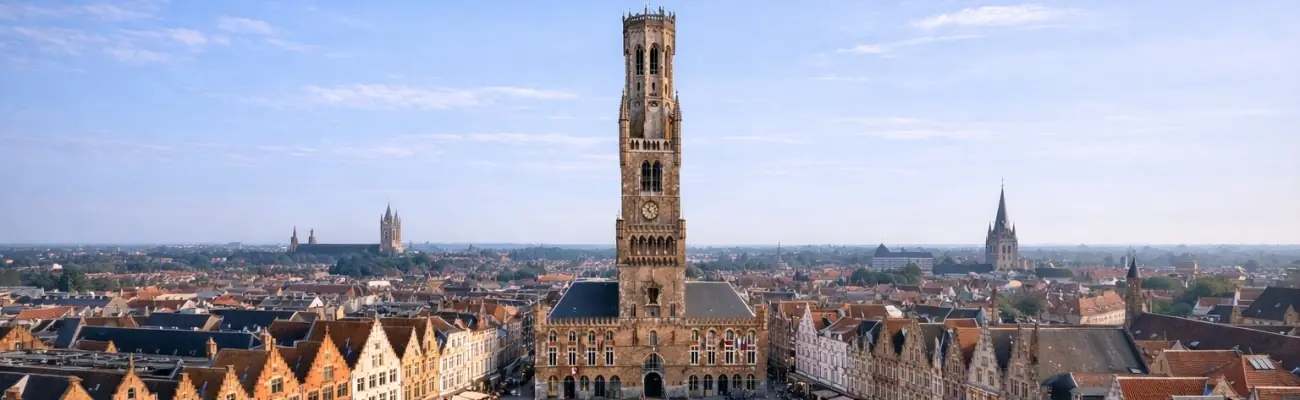
Rising 83 meters above the historic Market Square, the Belfry of Bruges stands as one of Belgium's most iconic medieval landmarks. This UNESCO World Heritage Site has watched over the city for more than seven centuries, serving as a symbol of civic pride and independence. Whether you're planning your first visit or want to make the most of your climb to the top, this complete guide covers everything you need to know about visiting the Belfry of Bruges.
What is the Belfry of Bruges?
The Belfry of Bruges (Belfort van Brugge in Dutch) is a magnificent medieval bell tower that dominates the city's skyline. Construction began in 1240, though the tower has undergone several renovations and reconstructions over the centuries, particularly after fires in 1280 and 1741. The current spire, which gives the tower its distinctive silhouette, was added in 1822.
Originally built as a symbol of the city's wealth and autonomy during the Middle Ages, the belfry served multiple purposes throughout history. It functioned as a watchtower for spotting fires and other dangers, a treasury for storing important city documents and charters, and a bell tower that marked the time and called citizens to important gatherings.
Today, the belfry remains one of Bruges' most popular attractions, drawing visitors from around the world who make the challenging climb to experience panoramic views of this fairy-tale city.
Why Visit the Belfry of Bruges?
Climbing the Belfry is one of the top things to do in Bruges.
Highlights include:
- Climbing 366 historic steps
- 360-degree panoramic views over Bruges
- The famous 47-bell carillon
- Historic chambers inside the tower
- Unique views over Market Square
The view from the top is often considered one of the best photo spots in Bruges.
How Long Does It Take to Visit the Belfry of Bruges?
Most visitors spend between 45 minutes and 1.5 hours at the Belfry, depending on crowd levels and how long they enjoy the view at the top.
The climb includes 366 narrow steps, so allow time for short breaks.
If you are organizing a full-day itinerary, you may also combine your visit with:
- A Bruges canal boat tour
- Burg Square exploration
- Basilica of the Holy Blood
- A chocolate museum visit
You can find suggested itineraries here.
Belfry of Bruges Tickets
Tickets are required to climb the Belfry.
General ticket information:
- Entry includes access to the tower and interior rooms
- Tickets are available on-site and online
- Daily visitor capacity is limited
- Entry may pause during peak hours
To save time and simplify planning, many visitors prefer booking tickets in advance or using a city pass option when available. Bruges E-pass would be the best option to save time and to save Money!
Opening Hours
The Belfry of Bruges maintains consistent opening hours throughout most of the year:
- Summer (April 1 – November 2): Daily from 09:00 to 20:00
- Winter (November 3 – March 31): Sunday to Friday: 10:00 to 18:00 - Saturday: 09:00 to 20:00
- Christmas Period (December 26 – 30): Daily from 09:00 to 20:00
These hours apply for most of the year, though seasonal variations may occur. The tower is closed on Christmas Day (December 25) and New Year's Day (January 1). During special events or maintenance work, hours may be adjusted, so always verify current opening times on the official website before your visit.
The last admission is one hour before closing to ensure visitors have adequate time to climb the tower and descend safely before the attraction closes.
The Climb: What to Expect
The 366 Steps
The journey to the top of the belfry involves climbing 366 narrow, steep steps. This is not an elevator-equipped modern tower; you'll be ascending a medieval structure with winding staircases that can be quite demanding. The climb typically takes 15-20 minutes at a moderate pace, though you'll want to stop along the way to catch your breath and explore the various chambers.
Important Physical Considerations
The climb is not recommended for individuals with mobility issues, heart conditions, or severe claustrophobia. The staircases are narrow (only one person wide in some sections), the steps are uneven, and there's no air conditioning. During the summer months, the enclosed stairways can become quite warm and stuffy.
If you have knee or joint problems, keep in mind that descending can be just as challenging as ascending. Take your time, use the handrails, and don't feel pressured to rush because other visitors are behind you.
What You'll See Along the Way
The climb itself is part of the experience. Along the way, you'll pass through several fascinating chambers:
The Treasury Room (around step 100): This former storage chamber once safeguarded the city's most important documents, including charters and seals. The massive door and lock system demonstrate the security measures taken to protect these valuable items.
The Carillon Chamber (around step 200): Here you'll find the impressive 47-bell carillon, one of the finest in Belgium. If you visit during a carillon concert (performances occur regularly), you might hear the bells ringing while you're in the tower a truly unforgettable experience. Concerts typically take place on Wednesdays, Saturdays, and Sundays.
The Clock Mechanism Room: You'll see the massive clock mechanism that has kept time for the city for centuries. The current mechanism, though modernized, maintains the tradition of this timekeeper that once regulated daily life in medieval Bruges.
The View from the Top
After conquering those 366 steps, you'll be rewarded with one of the most spectacular views in Belgium. From the viewing platform at 83 meters, you'll enjoy 360-degree panoramas of Bruges' medieval architecture, winding canals, and the flat Flemish countryside stretching to the horizon.
On clear days, you can see for miles in every direction. The view encompasses the Market Square directly below, the Church of Our Lady with its distinctive spire, the medieval city gates, and the network of canals that earned Bruges its nickname as the "Venice of the North."
Bring your camera, this is one of the best photo opportunities in the city. The viewing platform has openings that allow for unobstructed photography, though the protective screening means you'll need to work around it for the clearest shots.
Essential Tips for Visiting
Best Time to Visit
Early Morning: Arrive when the belfry opens at 9:30 AM to beat the crowds. The staircases are narrow, and you'll have a much more pleasant experience without queuing behind groups of visitors or waiting in congested stairwells.
Weekdays: Tuesday through Thursday tend to be less crowded than weekends and Mondays.
Off-Season: November through March (excluding Christmas holidays) offers the smallest crowds, though be prepared for colder viewing platform temperatures.
Avoid: Midday during summer months and weekends are typically the busiest times.
What to Wear and Bring
- Comfortable shoes: Essential for the steep climb. Avoid flip-flops or heels.
- Light layers: The stairwell can be warm, but the viewing platform can be breezy and cool, especially in winter.
- Small bag: Large backpacks can be cumbersome in narrow stairways.
- Water bottle: Stay hydrated, especially during summer climbs.
- Camera or phone: Don't forget to capture those spectacular views.
Accessibility and Restrictions
Unfortunately, the medieval nature of the belfry means it's not wheelchair accessible. There are no elevators, and the narrow, winding staircases make it impossible for those with mobility limitations to reach the top.
Large bags and luggage are not permitted. If you're visiting Bruges as part of a day trip and carrying bags, consider using the luggage storage facilities at the train station before visiting the belfry.
Photography Tips
The viewing platform offers excellent photography opportunities, but keep these tips in mind:
- Morning light is generally best for photographing the city from the tower
- A wide-angle lens captures more of the panoramic view
- Visit during blue hour (just before sunrise or after sunset) for dramatic lighting check if special evening openings are available
- The protective screening can interfere with photos; angle your lens through the openings for clearer shots
Combining Your Visit with Other Attractions
The Belfry is located directly on the Market Square (Grote Markt), making it easy to combine with other attractions:
Market Square: Explore the colorful guild houses surrounding the square and enjoy a Belgian waffle from one of the vendors.
Bruges City Hall: Just a short walk away in the Burg square, another magnificent medieval building worth visiting.
Basilica of the Holy Blood: Located adjacent to the City Hall, this church houses a venerated relic.
Chocolate Shops: The streets around Market Square are filled with Belgian chocolate shops, perfect for post-climb treats.
Canal Tours: After your vertical adventure, relax with a boat tour through Bruges' picturesque canals.
Final Thoughts
The Belfry of Bruges offers more than just impressive views; it's a journey through medieval history and a testament to the city's enduring legacy. While the 366-step climb challenges modern visitors, it connects us to centuries of citizens who relied on this tower for safety, governance, and timekeeping.
Whether you're a history enthusiast, photography lover, or simply seeking the best views of one of Europe's most beautiful cities, the Belfry of Bruges deserves a place on your itinerary. Plan ahead, arrive early, wear comfortable shoes, and prepare for a climb that rewards every step with increasingly spectacular perspectives on this UNESCO World Heritage city.
The belfry isn't just a tourist attraction, it's the beating heart of Bruges, and ascending its ancient steps offers an intimate connection to the city's remarkable past and present.