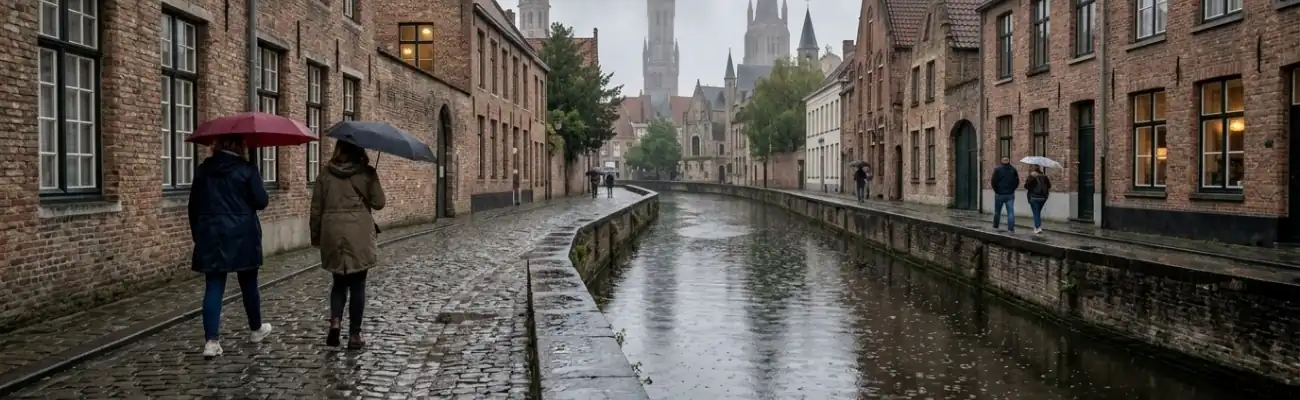
There is a particular kind of magic that descends on Bruges when it rains. The cobblestones turn a deeper shade of grey, the medieval canal reflections shimmer and blur, and the city's famous spires disappear into low-hanging cloud. For many travellers, this is Bruges at its absolute best, quieter, more atmospheric, and brimming with reason to duck inside and discover what makes this UNESCO World Heritage city so endlessly rewarding. If you have arrived to find Belgium doing what Belgium does best, providing generous helpings of moody, overcast weather, consider yourself lucky. Here is everything you need to know about spending a perfect rainy day in Bruges.
Why Rain Actually Makes Bruges Better
Unlike beach destinations or open-air archaeological sites, Bruges was practically designed for wet weather. Its compact medieval core means you are never more than a few minutes' walk from a warm interior. Its culture revolves around indoor pleasures: chocolate, beer, lace-making, and Flemish art. And with fewer fair-weather tourists clogging the narrow streets, a rainy Bruges is a more intimate, less crowded Bruges.
Top Indoor Highlights in Bruges on a Rainy Day
1. The Groeningemuseum: Flemish Art at Its Finest
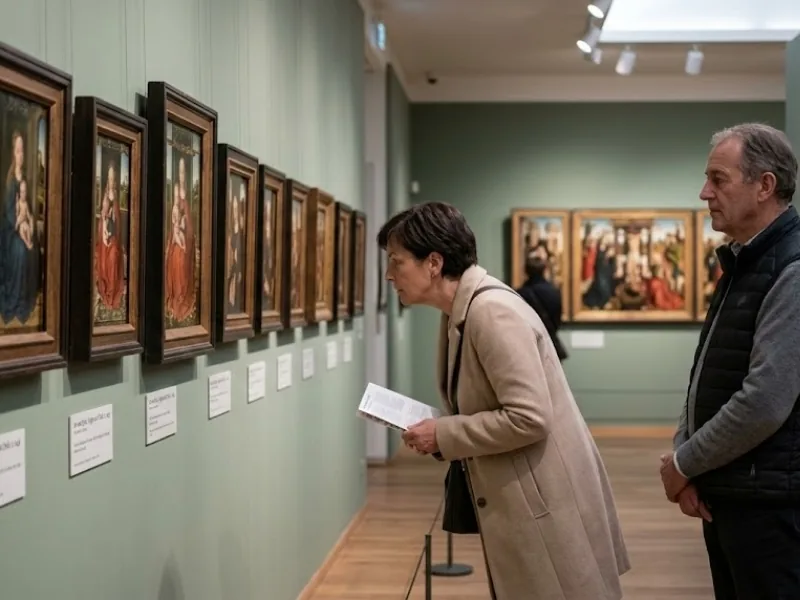
If you only visit one museum in Bruges, make it the Groeningemuseum. This compact but exceptional museum traces Flemish and Belgian painting from the 15th century to the 20th century. Despite its manageable size,it houses some of the most important artworks in Northern Europe.
What You Can See Inside:
- Jan van Eyck’s Madonna with Canon van der Paele is a masterpiece known for its extraordinary detail and realism.
- Luminous altarpieces by Hans Memling.
- Works by Hieronymus Bosch and Rogier van der Weyden.
- Later masterpieces by Paul Delvaux and René Magritte.
The collection moves through centuries of artistic evolution, allowing visitors
to clearly understand how Flemish art developed over time. Each room feels
intimate, making it easy to focus on individual works.
How Long Should You Spend?
Allow yourself at least two hours. The museum is small enough to feel approachable,
yet substantial enough to reward slow, careful looking.
On a rainy afternoon when natural light filters softly through the skylights
and the crowds are thinner, the experience becomes even more atmospheric.
It is widely considered one of the finest art experiences in Belgium.
Practical Information
Click here to see the location.
- Opening Days: Tuesday to Sunday. Wednesday is closed.
2. Museum Sint-Janshospitaal (Museum St John's Hospital)
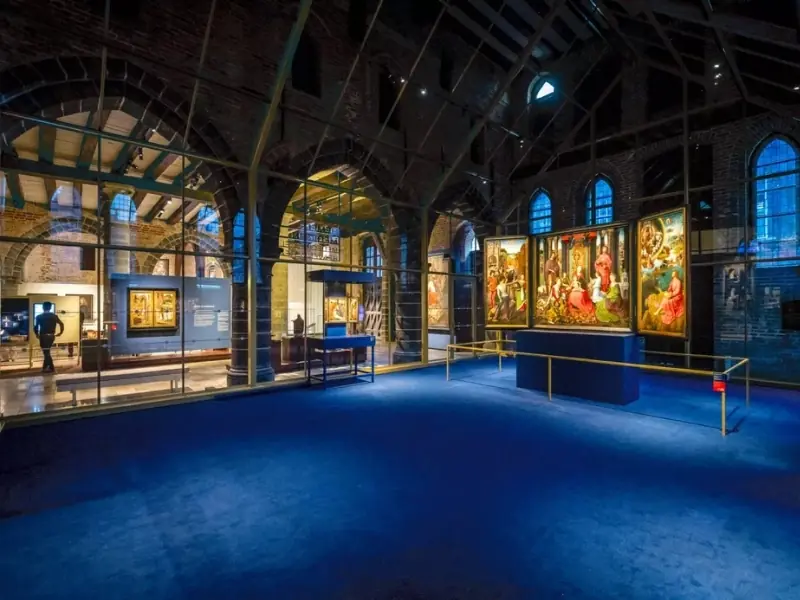
Just a short walk from the Groeningemuseum, the former St. John's Hospital houses a remarkable collection of works by Hans Memling, the 15th-century German-born painter who spent most of his career in Bruges and became one of its most celebrated citizens. The museum occupies a medieval hospital ward, and the building itself is as fascinating as the art. You can trace centuries of medical history through the original ward architecture before arriving at the Memling collection.
What You Can See Inside:
- The preserved medieval hospital ward with its historic wooden roof structure.
- Original architectural features that reveal centuries of medical practice in Bruges.
- A significant collection of paintings and devotional works by Hans Memling.
- The Shrine of Saint Ursula is a miniature gilded reliquary painted with tiny, exquisite narrative scenes.
The Shrine of Saint Ursula is the undisputed highlight. Its delicate craftsmanship,
intricate storytelling, and jewel-like detail feel like illuminated manuscript
pages brought to life. Seen up close, it is truly unforgettable.
How Long Should You Spend?
Allow at least 1.5 to 2 hours. The experience unfolds gradually, especially
as you move from the historic hospital interiors to the Memling masterpieces.
On a rainy afternoon, the quiet atmosphere makes it even more immersive.
Practical Information
- Location: Mariastraat, Bruges
- Closed: Monday
Click here
to see the location.
3. The Bruges Belfry (Belfort)
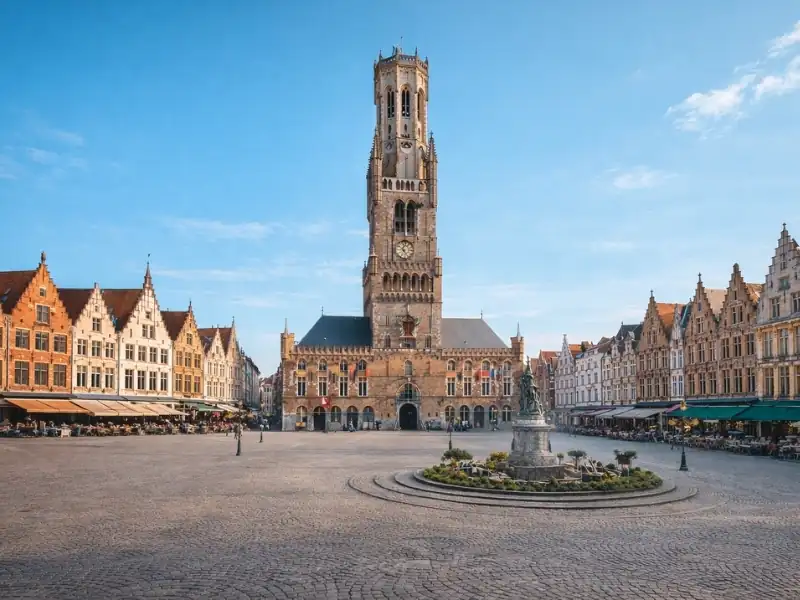
Yes, there are 366 steps. And yes, it is absolutely worth it.
The medieval Belfry of Bruges is one of the most iconic structures in Belgium,
and climbing its interior is an experience in itself. The ascent takes you
through a winding, increasingly narrow spiral staircase, past historic clock
mechanisms, ancient timber beams, and finally into the carillon chamber,
where 47 bells hang in Gothic splendour.
What You Can See Inside:
- The medieval stone tower structure dates back to the 13th century.
- Historic clockwork mechanisms that once regulated civic life.
- Massive wooden support beams high within the tower.
- The impressive carillon chamber with 47 bells.
- Panoramic views from the top over Bruges and the surrounding countryside.
From the summit, even on an overcast day, perhaps especially on an overcast day, the views are spectacular. You will see a sea of terracotta rooftops,
silver canals cutting through the medieval city, and the distant green
of the Flemish countryside fading softly into cloud.
How Long Should You Spend?
Allow around 1 to 1.5 hours in total. The climb itself takes time,
especially as the staircase narrows toward the top. You may also
encounter waiting time at the entrance, so arriving early or booking
ahead is recommended.
Practical Information
- Location: Markt Square, Bruges
Click here to see the location.
- Steps: 366 steps to the top (no elevator)
- Tip: Visit early in the day to avoid long queues
The Belfry stands directly on the Markt square, which is worth a slow
walk-around before or after your climb. The surrounding guild houses
and lively atmosphere complete the experience.
4. The Choco-Story Chocolate Museum

Bruges takes its chocolate seriously, and the Choco-Story Chocolate Museum
on Wijnzakstraat makes a genuinely entertaining and informative case for
why Belgian chocolate earned its global reputation. The museum traces cacao’s
journey from ancient Mesoamerican ceremonies to the refined Belgian praline,
combining history, culture, and craftsmanship in one engaging experience.
What You Can See Inside:
- Exhibitions explaining the origins of cacao in ancient civilizations.
- Displays showing how chocolate spread across Europe and evolved in Belgium.
- Interactive exhibits are suitable for both adults and children.
- Chocolate tastings are included as part of the visit.
- A live chocolate-making demonstration at the end of the tour.
The experience is both educational and enjoyable. It concludes as all good
chocolate experiences should, with a live demonstration and the opportunity
to taste freshly made Belgian pralines.
How Long Should You Spend?
Allow around 1 to 1.5 hours. The museum is easy to navigate at your own pace,
and the tastings and demonstrations add extra time to the visit.
Practical Information
- Location: Wijnzakstraat, Bruges
Click here to see the location.
- Open between 10:00 and 18:00
For the full Bruges chocolate experience, pair your museum visit with a stop
at one of the city’s renowned chocolatiers such as Del Rey, The Chocolate Line,
or Dumon on Eiermarkt, each offering its own distinctive style and flavours.
5. De Halve Maan Brewery
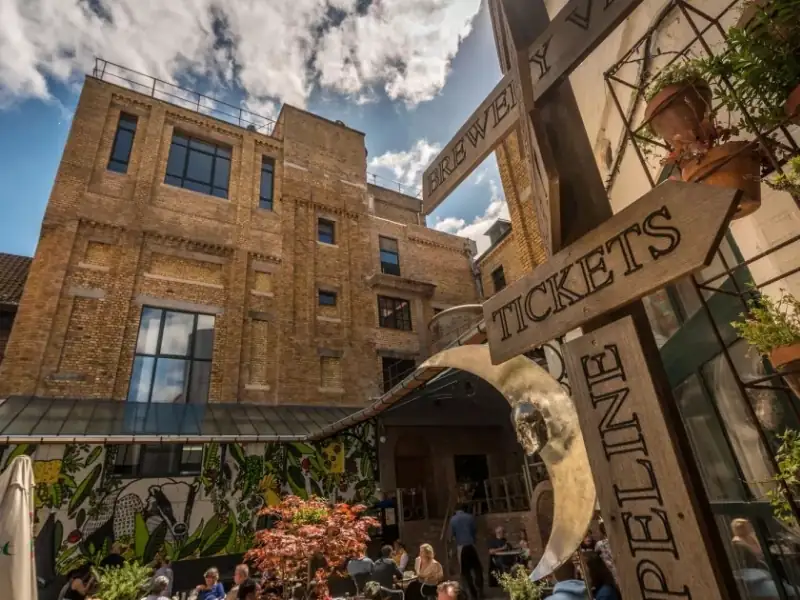
Belgium and beer are inseparable, and De Halve Maan (The Half Moon)
is Bruges’ last remaining family brewery, operating continuously since 1856.
It remains one of the city’s most authentic and lively experiences,
combining brewing heritage with panoramic city views.
What You Can See Inside:
- Explanation of the full beer production process, from malt to bottle.
- Historic brewing equipment alongside modern installations.
- The famous 3.2-kilometre underground beer pipeline connecting the brewery to the bottling plant.
- A rooftop terrace offering sweeping views over Bruges.
The tour is led by knowledgeable and entertaining guides who explain
both the technical side of brewing and the family history behind the brewery.
In 2016, De Halve Maan gained international attention when it installed
a 3.2-kilometre underground beer pipeline running beneath the city an infrastructure project that could only happen in Belgium.
The experience concludes with a tasting of their signature beers,
including Brugse Zot and Straffe Hendrik, served on the rooftop terrace
(covered in bad weather) with views across the terracotta rooftops of Bruges.
How Long Should You Spend?
Allow around 1.5 hours for the full tour and tasting. Tours operate
regularly throughout the day but often sell out in advance.
Practical Information
- Location: Walplein, Bruges