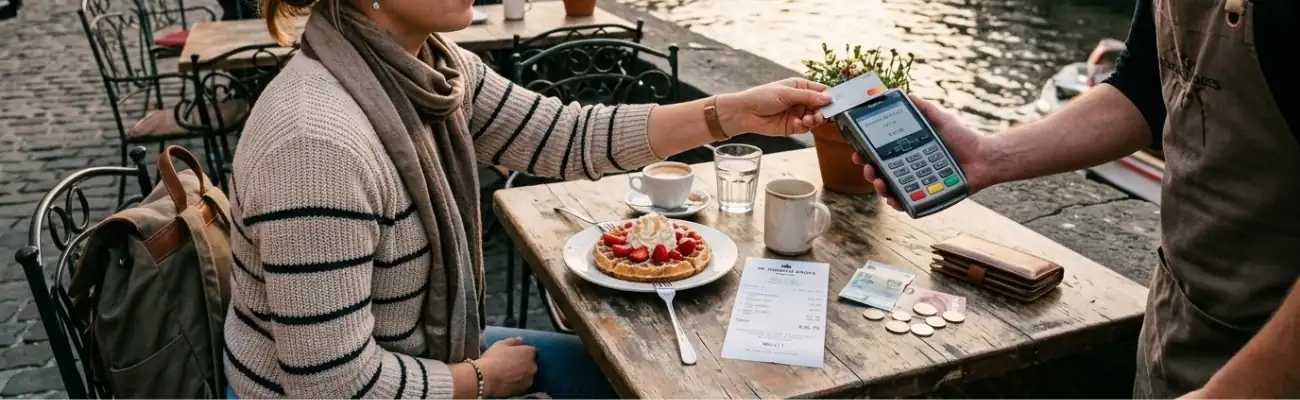
Bruges is one of the easiest European cities for visitors to manage payments. The city uses the euro, card payments are common, and most hotels, restaurants, museums, and shops are comfortable with contactless transactions. Still, a little preparation can help you avoid unnecessary ATM fees, poor exchange rates, and confusion about tipping customs.
This practical guide explains how money works in Bruges, how much cash you should carry, which ATMs are better for tourists, how to avoid Dynamic Currency Conversion, and what locals usually do when leaving a tip in Belgium.
What Currency Is Used in Bruges?
Bruges is located in Belgium, and Belgium uses the euro (€). All prices in restaurants, museums, shops, hotels, taxis, and supermarkets are shown in euros. Foreign currencies such as US dollars, British pounds, or Swiss francs are not accepted for everyday purchases.
Euro banknotes are available in €5, €10, €20, €50, €100, €200, and €500 notes. In daily travel situations, smaller notes such as €10 and €20 are the most useful. Larger notes may not always be accepted by small businesses, especially for low-value purchases.
Euro coins include €1 and €2 coins, as well as cent coins. Keeping a few coins with you is useful for public toilets, small tips, lockers, or quick market purchases.
Cash or Card in Bruges: What Should Tourists Use?
For most visitors, the best approach is to use a card for larger payments and keep a small amount of cash for smaller local situations. Bruges is very card-friendly, especially in the historic center, where many businesses serve international visitors every day.
Visa and Mastercard are widely accepted in hotels, restaurants, museums, attraction ticket offices, supermarkets, and most retail shops. Contactless payment is standard, and mobile wallets are also commonly used.
American Express is less reliable. It may work at larger hotels, luxury restaurants, and some international businesses, but smaller cafes, family-run shops, and casual restaurants may not accept it.
When Cash Is Still Useful in Bruges
Although you can pay by card in many places, cash is still helpful in specific situations. It is worth carrying a small amount of euros for:
- Street food stands and small snack shops
- Local markets, including stalls around 't Zand
- Traditional cafes or brasseries with card minimums
- Public toilets, which often require coins
- Small tips in restaurants, bars, taxis, or hotels
- Backup payment if a card terminal is temporarily unavailable
For a short visit of two or three days, carrying around €50 to €100 in cash is usually enough. You can then use your card for most meals, attraction visits, shopping, and hotel payments.
ATMs in Bruges: Where to Withdraw Money
ATMs are available in central Bruges, near shopping streets, around the Markt, close to the railway station, and beside bank branches. However, tourists should pay attention to the type of ATM they use, because fees and exchange rates can vary significantly.
Use Bank-Affiliated ATMs
The best option is to withdraw cash from ATMs connected to established Belgian banks. These machines are usually more reliable and more transparent than standalone tourist ATMs.
Common Belgian banks with ATMs include:
- BNP Paribas Fortis
- KBC
- ING Belgium
- Belfius
Bank ATMs are often located directly on the facade of a bank branch. If you need cash in Bruges, choosing one of these machines is generally safer and more cost-effective than using a standalone ATM in a busy tourist area.
Avoid Standalone Tourist ATMs
Standalone ATMs in high-traffic tourist locations can be expensive. These machines often appear near main squares, transport areas, and busy shopping streets. They may look convenient, but they can add withdrawal fees and offer poor conversion rates.
If you see a standalone ATM that is not attached to a Belgian bank branch, check the fees carefully before continuing. In many cases, walking a few extra minutes to a bank ATM can save money.
Dynamic Currency Conversion: Always Pay in Euros
When using a card or withdrawing cash, you may be asked whether you want to be charged in your home currency or in euros. This is called Dynamic Currency Conversion, often shortened to DCC.
For international travelers, selecting euros is usually the better choice. When you choose your home currency, the exchange rate is set by the ATM operator or payment provider, and it is often less favorable. When you choose euros, your own bank or card provider handles the conversion.
This rule applies both at ATMs and card terminals in restaurants, shops, and hotels. If the machine asks you to choose between euros and your own currency, choose euros.
Should You Exchange Money Before Visiting Bruges?
In most cases, withdrawing euros from a bank ATM in Belgium is more practical than exchanging large amounts of cash before arrival. Airport exchange counters and hotel exchange desks often provide less favorable rates than bank card networks.
A sensible approach is to bring a small amount of euros for your first expenses, then use a bank-affiliated ATM in Bruges if you need more cash. This gives you flexibility without carrying too much money during your trip.
Are Travel Cards Useful in Bruges?
Travel cards such as Wise or Revolut can be useful for visitors who want to reduce foreign transaction costs. These cards are often popular with travelers visiting several European countries because they can offer competitive exchange rates and lower international payment fees.
Before your trip, check your own card provider's rules for foreign purchases, ATM withdrawals, weekend exchange markups, and monthly withdrawal limits. Fees can change depending on your country, bank, and card plan.
Tipping in Bruges: What Is Normal in Belgium?
Tipping in Bruges is optional, not obligatory. Belgium does not follow the same tipping culture as the United States, where a large percentage is expected at the end of a meal. In Bruges, restaurant prices generally already account for service, so visitors are not expected to add a large tip as a standard rule.
Local tipping habits are modest. Many people simply leave the small difference when rounding the bill, or add a few euros when service has been especially friendly, attentive, or helpful. Not tipping after average service is normal and should not feel uncomfortable.
How Much Should You Tip in Bruges?
| Situation |
Typical Local Practice |
| Casual restaurant |
Round up the bill or leave €1 to €2 for good service |
| Fine dining restaurant |
Leave around 5% to 10% only for excellent service |
| Cafe or bar |
Leave small coins or round to the next euro |
| Taxi |
Round up to the nearest euro |
| Hotel porter |
€1 per bag if you wish |
| Housekeeping |
Optional; a small amount at the end of the stay is enough |
| Canal boat tour |
Optional small tip if the guide was especially good |
| Public toilet attendant |
Usually €0.50 to €1 in coins |
Cash Tips Are Usually Better
If you want to leave a tip, cash is often the easiest option. A few coins or a small note left on the table feels natural in Belgium and is more direct than adding a tip to a card payment.
For example, if your bill is €38.60 and the service was pleasant, paying €40 is perfectly acceptable. For a more special dinner, you may leave a few extra euros if the service genuinely improved the experience.
Money Tips for Restaurants and Cafes in Bruges
Restaurants around the Markt, Burg Square, and the main canal areas are used to international visitors. Card payments are common, but it is still a good idea to carry a little cash for smaller cafes, traditional beer bars, waffle shops, or family-run restaurants outside the busiest tourist streets.
Before sitting down, you can quickly check whether card payments are accepted, especially if you are planning a small purchase such as coffee, beer, fries, or dessert. Most places are flexible, but smaller businesses may prefer cash for low amounts.
Quick Money Guide for Bruges
- Currency: Euro (€)
- Best payment method: Card for most purchases
- Cards commonly accepted: Visa and Mastercard
- Less reliable card: American Express
- Recommended cash: €50 to €100 for a short visit
- Best ATMs: Bank-affiliated ATMs from Belgian banks
- ATMs to avoid: Standalone tourist ATMs with high fees
- DCC advice: Choose euros, not your home currency
- Tipping: Optional and usually modest
- Public toilets: Keep coins ready
Final Thoughts
Managing money in Bruges is simple once you know the local habits. Use your card for most payments, carry a modest amount of cash for small expenses, choose bank ATMs when you need euros, and avoid paying in your home currency at card terminals. Tipping is appreciated for good service, but it is not a strict obligation.