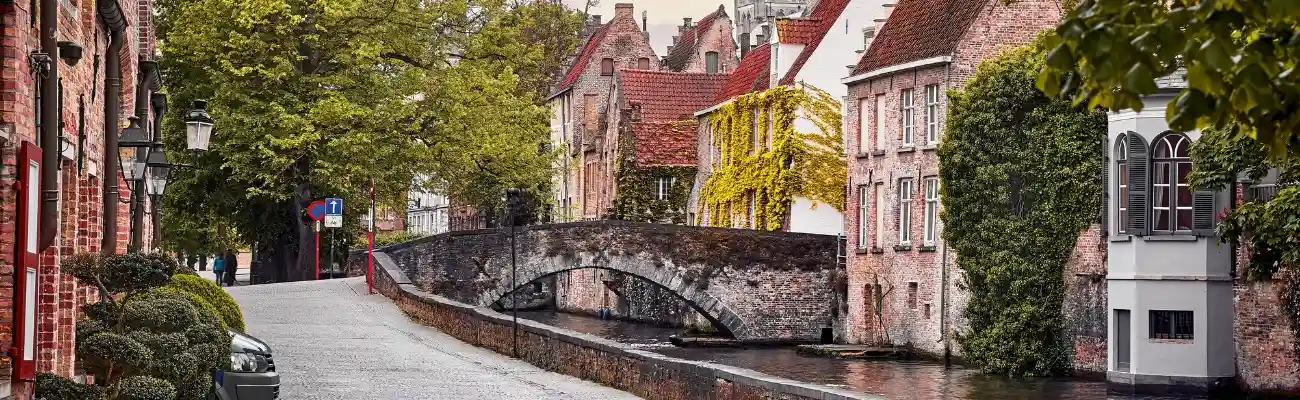
It is a question that comes up reliably before almost every European city break: Is it actually safe? For Bruges, the honest answer is an unusually clear yes, but like any destination, the detail matters. Bruges is not simply safe in the way that a resort with controlled access is safe. It is safe in the way that a well-maintained, well-policed, genuinely liveable small city tends to be safe: low violent crime, a strong dependence on tourism that incentivises visible security, compact streets that are easy to navigate, and a population that is accustomed to and broadly welcoming of international visitors.
This guide works through the specific safety questions visitors most commonly ask: What does the data actually say? What risks exist, and where? Is it safe to walk at night? Is it safe for solo travellers? What about families and solo women? And what practical steps can you take to make sure nothing disrupts your time in one of Europe's most beautiful cities?
The Data: How Safe Is Bruges, Really?
The numbers are consistently reassuring. According to Numbeo's city crime comparison data (last updated July 2025), Bruges scores a crime index of 25.24, classified as "Low" compared to Brussels at 55.67, classified as "High." On the corresponding safety scale, Bruges sits at 74.76 out of 100, while Brussels scores 44.33. Numbeo's data is crowd-sourced from residents and visitors and represents one of the most widely referenced independent city safety benchmarks in Europe.
Belgium as a whole ranks 16th out of 163 countries on the 2024 Global Peace Index, published annually by the Institute for Economics and Peace — placing it above Japan, the Netherlands, Australia, Germany, and the United Kingdom (GPI 2024, Institute for Economics and Peace). Within Belgium, crime is heavily concentrated in Brussels and Antwerp, particularly around major train stations and in specific urban neighbourhoods. The province of West Flanders, where Bruges is located, has one of the lowest annual crime rates in the country.
Visitor perception data from Numbeo reinforces this picture. On the question of safety while walking alone during daylight, Bruges scores 86.65 out of 100, rated "Very High." For safety walking alone at night, the score is 69.99 out of 100, rated "High." By comparison, Brussels scores 64.54 for daytime and just 33.82 for nighttime walking safety on the same scale. These are strong figures by any European benchmark, and they reflect the consistent experience reported by visitors across travel platforms.
Make Your Bruges Day Easier to Plan
Bruges is compact and easy to explore on foot. Plan your museums, landmarks and other included experiences with the Bruges E-pass.
See Passes & Prices
1. Pickpocketing and Petty Theft
By far the most common issue affecting tourists in Bruges is petty theft, specifically pickpocketing in crowded areas. This is not unique to Bruges, nor is it especially prevalent compared to other popular European tourist destinations, but it is the primary risk that visitors should be aware of.
The areas of highest risk are predictable: the Markt (Market Square), Steenstraat, the canal boat departure points, and the areas around the main tourist monuments during peak visitor hours. These are the places where crowds concentrate, where visitors are distracted by their surroundings, and where opportunistic theft is easiest. Bags left unattended on café chairs, phones placed face-up on restaurant tables, and cameras worn loosely around the neck are the most common targets.
Violent robbery is rare. The vast majority of theft in Bruges is opportunistic and non-confrontational: a phone lifted from a table, a wallet taken from an unzipped bag while a visitor is looking up at the Belfry. Standard awareness and basic precautions eliminate most of this risk entirely.
What to do:
- Use a bag that zips closed and wear it across your body rather than on one shoulder.
- Keep your phone in a pocket rather than on a table or in an open bag.
- Use a money belt or hotel safe for your passport, spare cash, and backup cards.
- Be particularly alert in the Markt area during peak visitor hours and on canal boat tours.
- Never leave bags on café chair backs or on the floor beside you in crowded spaces.
2. The Area Around Bruges Train Station at Night
The train station area is consistently flagged as the one location in Bruges where visitors should exercise additional caution, particularly late at night. Like many European cities, the station precinct attracts a different demographic after dark than the historic centre, and the lighting and foot traffic levels drop noticeably as the evening progresses.
This does not mean the station area is dangerous; it is not, but it is worth being more alert there than in the canal-lit streets of the historic core. If you are arriving or departing on a late train, keep your belongings secure and move directly between the station and your hotel rather than lingering.
3. Cyclists
This one surprises visitors who expect only conventional urban risks. Bruges is an intensely cycle-friendly city, and cyclists move quickly on dedicated lanes that are not always immediately obvious to pedestrians unfamiliar with the layout. Stepping into a cycle lane without looking or walking along a route shared with cyclists is a genuine cause of accidents and occasional tension.
Always check for cyclists before stepping off a pavement or crossing a lane. Cyclists in Bruges typically have the right of way, and the habit of looking both ways before stepping anywhere applies more literally here than in many other cities.
4. Canal Edges
Bruges's canals are beautiful and central to the city's identity. They are also unfenced in many places along the pedestrian routes, with stone edges that become particularly slippery when wet. Visitors who are not paying attention, or who have consumed a few Belgian beers, should be more careful near canal edges than they might otherwise think to be. This is especially relevant with young children.
Is Bruges Safe at Night?
Yes, with straightforward common sense applied. The historic centre of Bruges is well-lit, consistently populated with visitors and locals well into the evening, and actively patrolled. Walking back from a restaurant or bar to your hotel at midnight in the Markt area or along the main canal routes is not a scenario that requires concern for the vast majority of visitors.
Long-term residents of Bruges regularly note that they walk the city alone in the early hours of the morning without feeling nervous. One local perspective quoted on Tripadvisor's Bruges forum captures the general consensus well: the biggest danger facing most visitors is drinking too much Belgian beer, not any external threat.
The areas to be slightly more cautious in at night are those at the periphery of the historic centre, quieter residential streets far from the main tourist routes, and the area around the train station. Sticking to the lit, populated routes that connect the city's main attractions is straightforward and genuinely adequate.
Is Bruges Safe for Solo Travellers?
Bruges is widely regarded as one of the more comfortable European cities for solo travel. The compact layout means you are rarely far from other people, the city centre is well-lit and navigated on foot without difficulty, and the absence of any significant no-go zones means the mental map for a solo visitor is simple.
Solo travellers, men and women, consistently report feeling comfortable walking the historic centre in the evening, eating alone in cafés and brasseries (which is culturally normal in Bruges without any awkwardness), and navigating the city without concern. The city's strong tourism infrastructure also means English is universally spoken in the centre, reducing the isolation that can affect solo visitors in less tourist-oriented destinations.
Is Bruges Safe for Solo Female Travellers?
The data and first-hand accounts consistently point in the same direction. According to Travel Ladies, a platform that aggregates verified safety reviews from solo female travellers worldwide, Bruges holds a safety rating of 4.8 out of 5 based on 17 first-hand traveller experiences, and 4.7 out of 5 based on independent research and crime data. The platform currently ranks Bruges as the #7 safest destination in the world for solo female travellers. Individual reviewers describe feeling safe walking the streets alone, including after dark, and note that the city's compact, well-lit layout makes it easy to navigate without concern.
The caveats that apply to any city apply here too: trust your instincts, stick to populated and well-lit routes after dark, and be more alert in the train station area than in the canal district. One reviewer on Travel Ladies who visited in August 2025 notes that on busy tourist streets, the crowds can feel overwhelming, but that the quieter side streets still well-populated, are often the more comfortable choice. Unwanted attention is described as rare across reviews, and local women contributing to the same platform describe Bruges as generally very safe, with drunk tourists occasionally causing noise in the evenings as the main nuisance rather than any genuine threat.
Practical tips specifically for solo female travellers:
- The historic centre canal routes are the safest and most pleasant routes to walk at night. Prioritise these over peripheral streets.
- Bars and restaurants in Bruges are accustomed to solo diners and drinkers; you will not stand out or feel uncomfortable eating or drinking alone.
- Pharmacies (apotheek) throughout the city have English-speaking staff and are a reliable point of contact for any minor medical or personal need.
- 112 is the EU-wide emergency number and connects directly to police, ambulance, or fire services.
Is Bruges Safe for Families with Children?
Bruges is an excellent destination for families and presents minimal safety concerns in this context. The largely car-free historic centre means children can walk the main streets without vehicle traffic concerns, and the cobblestone lanes, while occasionally challenging for pushchairs, are navigated safely on foot at a slow pace.
The main family-specific safety note relates to the canal edges discussed above. In several areas of the city, particularly along the scenic walking routes between the Beguinage and the Markt, canal edges are not fenced and require attention with young children. This is not unique to Bruges; it is a feature of many medieval canal cities, but it is worth being aware of.
Beyond that, the city is extremely family-friendly in practice: crowds are manageable outside peak summer months, attractions are compact and close together, and the general atmosphere is relaxed and unhurried. Police presence in the tourist areas is visible without being intimidating.
Bruges vs Brussels: Understanding the Difference
Many visitors to Bruges also pass through Brussels, and the significant difference in safety profile between the two cities is worth understanding clearly. Brussels has one of the highest crime rates among European capital cities. Pickpocketing in the pedestrian zone and around major train stations (particularly Brussels-Midi) is significantly more prevalent than in Bruges, and the city has specific neighbourhoods that warrant more caution than anything in Bruges.
Bruges is not Brussels. The two cities are 25 minutes apart by direct train, but their safety profiles are meaningfully different. Visitors who encounter negative experiences in Brussels transit and worry about Bruges specifically are applying the wrong reference point. The province of West Flanders, where Bruges sits, operates at a crime level that is categorically lower than the Brussels-Capital Region.
If you are travelling from Brussels to Bruges by train, be more alert at Brussels-Midi and Brussels-Central stations (where pickpocketing is well-documented) than at any point during your time in Bruges itself.
Emergency Information and Useful Numbers
- Emergency services (police, ambulance, fire): 112 works across all EU countries, English-speaking operators available
- Non-emergency police: 101
- Bruges tourist police: Located in the city centre, English-speaking, specifically available to assist tourists
- Pharmacies (apotheek): Available throughout the city centre; English spoken; identifiable by the green cross sign
- Lost property: Report to the local police station at Lodewijk Coiseaukaai 3, Bruges
Practical Safety Tips for Visiting Bruges
- Secure your bag. Use a cross-body bag that zips closed. The Markt area and canal boat tours are the highest-risk spots for opportunistic theft.
- Use your hotel safe. Store your passport, spare cash, and backup payment card there daily. Carry only what you need.
- Watch for cyclists. Always check both directions before stepping off a pavement. Cyclists move quickly and have the right of way on designated lanes.
- Be careful near canal edges. Particularly relevant after dark or if you have young children. Stone edges become slippery when wet.
- Stay in the historic centre at night. Well-lit, well-policed, consistently populated. The safest and most pleasant area to be in the evening.
- Exercise extra caution at the train station after dark. The one area in Bruges where a slightly higher level of alertness is warranted.
- Don't leave items visible in a parked car. Car break-ins, primarily smash-and-grab, are a growing issue in Belgium generally. Leave nothing visible in any vehicle.
- Keep 112 saved on your phone. The EU emergency number works immediately from any location.
- Wear appropriate footwear. The cobblestones throughout the historic centre become genuinely slippery in the rain. Flat, non-slip soles make the city considerably more comfortable and safer to navigate.
PLAN YOUR BRUGES VISIT
Ready to Explore Bruges?
Once you know what to expect, the next step is planning your sightseeing.
Use the Bruges E-pass to organize your attraction visits with one convenient digital pass.
View Bruges E-pass Options
Final Verdict: Is Bruges Safe for Tourists?
Yes, Bruges is one of the safer tourist destinations in Western Europe, with a crime index significantly lower than Brussels, Amsterdam, Paris, or Barcelona. The risks that do exist are almost entirely limited to opportunistic petty theft in crowded tourist areas, and these are mitigated almost completely by basic precautions that experienced travellers will apply automatically.
The city's dependence on tourism creates a structural incentive to maintain a safe, welcoming, and well-policed environment. Violent crime is rare. There are no genuine no-go zones in the historic centre. The streets are well-lit and populated in the evenings. Solo travellers, families, and solo women all report feeling comfortable in Bruges consistently and across multiple travel platforms.
Bruges rewards visitors who arrive knowing what to expect and what to watch for. Come with your belongings secured, your emergency number saved, and your attention on the canals and architecture rather than your phone on a table and the city is as safe as anywhere in Europe that you are likely to visit.