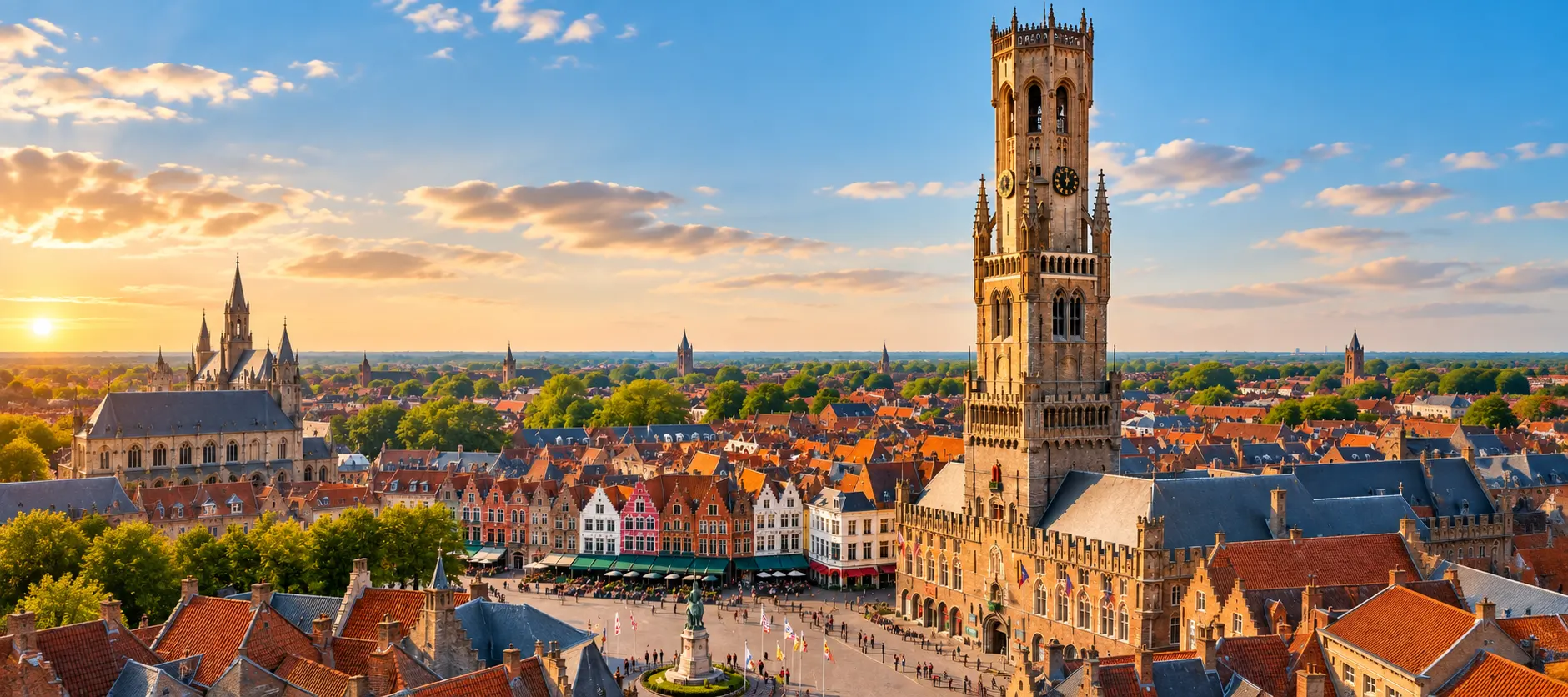
Bruges is, without question, one of the most beautiful small cities in Europe. It is also, between the hours of 10 am and 5 pm on a summer weekend, one of the most crowded. The Markt fills with tour groups by mid-morning, the queue for the Belfry stretches into the square by eleven, the canal boat departure points back up shortly after, and the narrow cobblestone lanes around Rozenhoedkaai become an obstacle course of tripods and selfie sticks before lunch. None of this makes Bruges less beautiful, but it does make it considerably less enjoyable if you have not planned around it.
The good news is that Bruges rewards planning in a way that very few cities do. Because the historic centre is compact and most major attractions are within fifteen minutes of each other on foot, the difference between a crowded visit and an almost entirely crowd-free one comes down almost entirely to sequencing. When you go, in what order, and how early or late you begin your day.
This guide breaks down two complete itineraries, one built around an early start, one around a late start, with honest assessments of the crowd situation at each point, so you can choose the approach that suits your travel style and genuinely enjoy the city rather than just surviving it.
Understanding When Bruges Gets Crowded
Before choosing your approach, it helps to understand the crowd pattern that shapes a typical day in Bruges. The city receives a significant proportion of its visitors as day-trippers from Brussels (one hour by train), from Ghent (thirty minutes), and from cruise ships docking at the port of Zeebrugge, twelve kilometres away. This creates a very predictable crowd curve.
Most day-trippers from Belgium start arriving around 9 am, and cruise ship passengers tend to reach the city centre from around 10 am onwards. The peak window when the Markt, Burg Square, Rozenhoedkaai, and the Belfry queue are at their most congested runs reliably from around 11 am to 4 pm. Tour groups concentrate primarily in Bruges’s Burg Square, where the City Hall and Belfry are located, and that area can be crowded from 11 am to 4 pm, but it is only a small portion of the old city that is crowded for a small portion of the day.
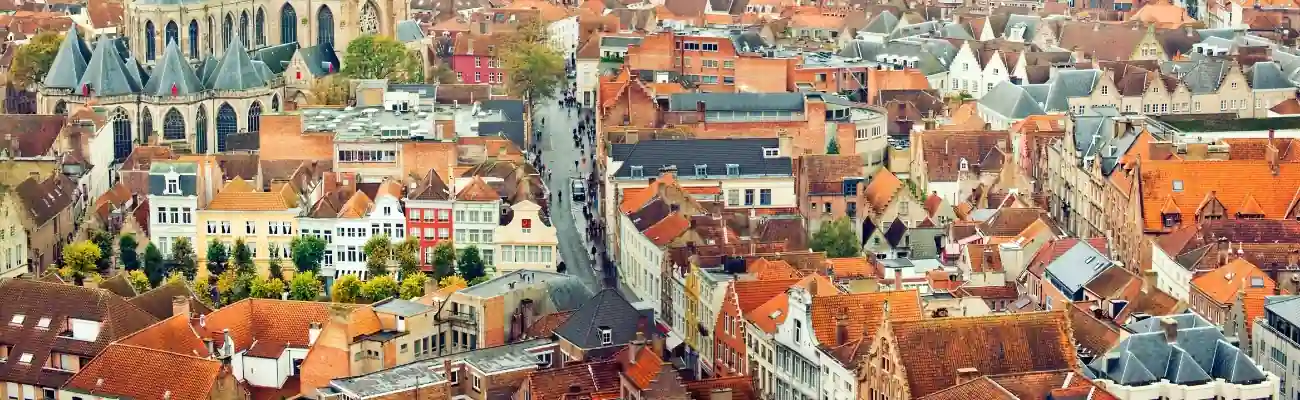
The key insight, and the one that shapes both itineraries below, is that the crowd problem in Bruges is geographically concentrated. As you venture away from Burg Square and past the Groeningemuseum, you start to lose the tour groups. The northern half of Bruges above Burg Square is practically devoid of tourists. Areas like Minnewater Park, the Beguinage, Sint-Anna, and the old windmill route rarely feel crowded at any hour. The problem is specific, and the solution, whether you approach it from the morning or the evening, is to be strategic about when you encounter the busiest spots.
The Early Start Itinerary
Best for: Photographers, families with young children who wake early, visitors staying overnight in Bruges, and anyone who wants the most iconic spots with almost no one else in them.
The early start strategy is built on a single principle: get to the most crowded attractions first, before the crowds arrive, and spend the remainder of the day in the quieter parts of the city that the tour groups never reach.
7:00 AM - Rozenhoedkaai and the Canal District
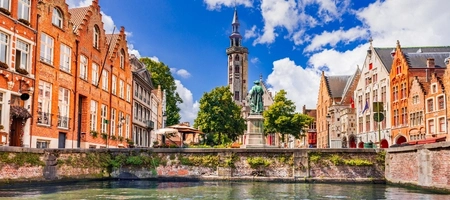
This is one of the most photographed viewpoints in Belgium, the bend in the canal where the Belfry rises above the rooftops, and the medieval guild houses line the water’s edge. Rozenhoedkaai is so popular that it even has its own location tag on Google Maps called the “Bruges Photo Point.” It can get really busy here during the day, but the light for photography is actually best in the morning or around sunset. At 7 am in summer, you will likely have the view entirely to yourself or close to it. Spend twenty minutes here. Take the photograph you came for. Then walk slowly in both directions of the canal before the city wakes up.
Crowd level at 7:00 AM: Very low. Other early risers, local dog walkers, and the occasional jogger. No tour groups.
8:30 AM - Markt Square and Breakfast
The Markt at 8:30 am on a weekday is a genuinely different place from the Markt at noon. The square is quiet, the café terraces are setting up, and the Belfry rises above an almost empty cobblestone expanse. Sit down at one of the brasseries on the square for a proper Belgian breakfast coffee, fresh bread, cold cuts, and cheese and take in the architecture at your own pace. This is the version of the Markt that most visitors never see.
Crowd level at 8:30 AM: Low. Day-trippers have not yet arrived. Enjoy it.
9:30 AM - Belfry of Bruges (Belfort)
The Belfry opens at 9:30 am. By overnighting in Bruges, you can enjoy the Belfry’s views from the tower before 10 am and avoid the crowds. Being in the first group of the day means no queue at the entrance, a much quieter climb up the 366 steps, and the panorama at the top with far fewer people than you would encounter at midday. The view over the city in the morning light, with mist still sometimes sitting on the canal network below, is exceptional. Budget around 45 minutes, including the climb and descent.
If you hold a Bruges E-pass, the Belfry is included; no ticket queue, walk straight to the entrance. This saves meaningful time when crowds arrive later in the morning.
Crowd level at 9:30 AM: Very low. First entry of the day. Go directly when the doors open.
10:30 AM - Basilica of the Holy Blood
A three-minute walk from the Belfry, the Basilica of the Holy Blood on Burg Square opens at 10 am. Entry is free. The lower chapel is austere and ancient; the upper chapel is richly decorated and houses the celebrated relic a phial said to contain a cloth marked with the blood of Christ, venerated in Bruges since the 12th century.
Crowd level at 10:30 AM: Moderate and building. This is the last genuinely quiet slot at Burg Square. By 11 am, conditions change significantly.
11:30 AM - Groeningemuseum
With the most crowded public spaces now becoming busier, this is the ideal moment to step inside. The Groeningemuseum, home to one of the world’s finest collections of Flemish Primitive painting, including works by Jan van Eyck and Hans Memling, requires around 90 minutes to see properly. While the Markt and Burg Square fill with tour groups outside, you will be inside, in front of some of the most extraordinary paintings of the 15th century. Entry is included with the Bruges E-pass.
Crowd level at 11:30 AM: Low inside the museum. Museums consistently absorb the midday crowd peak. This is exactly when to use them.
1:00 PM - Lunch in the Sint-Anna Quarter
Rather than eating near the Markt at peak hour, walk northeast towards the Sint-Anna neighbourhood. Sint-Anna is one of the quieter neighbourhoods of Bruges and a great place to escape the crowds. The streets here are genuinely residential, the canal views are uninterrupted, and the handful of small restaurants and cafés in this area serve the same Belgian classics as the tourist-heavy spots near the Markt at lower prices and with considerably less noise.
2:30 PM - Windmills, City Gates, and the Northern Circuit
The northeast of Bruges, along the old city ramparts, is where you will find four surviving medieval windmills and the Kruispoort city gate. This part of the city has never seemed crowded to regular visitors, and the wide open green spaces along the old moat provide a complete change of atmosphere from the cobbled centre. Walk the ramparts path from the windmills toward the Dampoort, and back, it takes around forty minutes and feels, in peak summer, like a different city entirely.
Crowd level at 2:30 PM: Very low. Tour groups do not come here. One of Bruges’s best-kept secrets for exactly this reason.
4:30 PM - Beguinage and Minnewater Park
As the tour groups begin to leave the city in the mid-afternoon, the Beguinage (Begijnhof) and the adjacent Minnewater Park become viable again. Visit close to sunset if you can; the light is beautiful, and there are usually fewer crowds. The Beguinage is a UNESCO-listed enclosure of whitewashed houses around a central courtyard, inhabited today by Benedictine nuns. Entry is free. Minnewater Park, the Lake of Love, sits immediately adjacent and is one of the most tranquil green spaces in the city.
The Late Start Itinerary
Best for: Night owls, visitors who prefer a leisurely morning, those staying in Bruges for multiple nights, and anyone who wants to experience the city after the day-trippers leave.
The late start strategy accepts that the peak crowd window exists and works around it rather than against it. Begin the day in the parts of Bruges that are always quiet, wait out the worst of the crowds in a museum or café, and then experience the iconic spots in the late afternoon and evening when most day-trippers have already caught their train or coach home and the city begins to breathe again.
10:00 AM - Slow Breakfast and the Morning Market
Begin at a canal-side café away from the Markt, the area around Huidenvettersplein, or along Steenhouwersdijk offers several good options. Take your time over coffee and a proper Belgian breakfast. On Wednesday and Friday mornings, the Vismarkt (Fish Market) near Rozenhoedkaai is worth visiting early for local produce.
11:00 AM - Groeningemuseum or Gruuthusemuseum
As the city centre hits peak congestion, step inside. Both the Groeningemuseum and the Gruuthusemuseum, a 15th-century mansion filled with Flemish decorative arts, overlooking the Church of Our Lady, are genuinely absorbing and relatively uncrowded even in high season. The Gruuthusemuseum in particular rewards slow looking: the building itself, with its vaulted ceilings and carved stonework, is as impressive as the collection. Budget 90 minutes for either. Both are included with the Bruges E-pass.
12:30 PM - Lunch, then Beguinage
Eat lunch at a traditional brasserie in the southern part of the city, then walk to the Beguinage. The midday quiet that settles over the Begijnhof’s enclosed courtyard, particularly on weekdays, is one of the more unexpectedly peaceful experiences in Bruges. The swans on Minnewater and the willow trees around the lake make this a genuinely restorative stop. Take your time.
2:30 PM - De Halve Maan Brewery Tour
The city’s last working family brewery offers guided tours in English at regular intervals throughout the afternoon. The tour takes around 45 minutes and ends, logically, with a tasting of the brewery’s own Brugse Zot or Straffe Hendrik. This is a useful way to spend the mid-afternoon slot when the Markt and Belfry are at their most congested, and it is considerably more enjoyable than queuing.
4:30 PM - Belfry of Bruges
By overnighting in Bruges, you can enjoy the Belfry’s views from the tower after 4 pm and avoid the crowds. The Belfry stays open until 6 pm (last entry 5 pm). Arriving at 4:30 pm means the queue has cleared substantially, the afternoon light on the rooftops and canals below is exceptional, and the climb feels far more comfortable than at midday. If you time it right, you can be at the top as the bells mark 5 pm; the carillon rings on the hour throughout the day.
Crowd level at 4:30 PM: Low and falling. Day-trippers are leaving. The city’s own rhythm begins to reassert itself.
5:30 PM - Rozenhoedkaai at Golden Hour
The light at Rozenhoedkaai is best in the morning or around sunset. If you come here in the evening, it is simply magical, with the added bonus of no crowds. At 5:30 to 6:30 pm in summer, the canal reflects warm evening light, and the tour groups are long gone. This is the version of the photograph that most visitors never get, not because it requires luck, but because it requires staying.
7:00 PM - Dinner and the Evening City
After 6 to 7 pm, most people leave, and evenings are, in many experienced visitors’ view, the best time to be in Bruges. Strolling the picturesque canals at sunset and seeing the beautifully lit buildings and bridges in the evening is described as magical. Book dinner at a traditional brasserie for 7:30 pm. Order carbonade flamande or moules-frites. Order a dark Belgian abbey beer. Walk back to your hotel along whichever canal route takes your interest. The city will feel, by this point, like it belongs to you.
Which Itinerary Is Right for You?
- Choose the early start if you want the iconic photographs with empty streets, you have young children who wake early and fade by afternoon, or you are visiting as a day-tripper and need to cover the major sights efficiently before your return train.
- Choose the late start if you are staying overnight in Bruges, you prefer a slower morning, or you want to experience the city in the golden hour and evening light that most day-trippers never see.
- Either approach works better on weekdays. Saturday is by far the busiest day. Sunday evening and Monday are among the quietest. Note that many Bruges museums are closed on Mondays; check before planning museum-heavy days around that schedule.
The Places That Are Never Crowded
Regardless of which itinerary you follow, the following areas of Bruges are reliably uncrowded at almost any time of day and worth building into your route:
- Sint-Anna quarter - residential streets, small breweries, the Jerusalem Church
- The windmill route along the northeast ramparts
- Dampoort and the northern canal network - completely off the tourist circuit
- Minnewater Park - particularly on weekday mornings
- Predikherenrei - a canal-side street with bars and views that most visitors walk straight past
- The area around Gentpoort - the southern city gate- is rarely visited despite being one of the best-preserved medieval gates in Flanders
Final Thoughts
Bruges does not require you to be superhuman about waking early or strategically disciplined about timing to be enjoyed properly. What it does reward is a willingness to think slightly differently about when you encounter the famous spots. The Belfry at 9:30 am and the Belfry at 1 pm are technically the same building. The experience of climbing them is entirely different. Rozenhoedkaai at 7 am and at 11 am produces photographs that look nothing alike, one with clear water and morning mist, one crowded with tripods and guided groups.
Choose your starting point, plan your sequence, and let the city do the rest. Bruges is one of the finest places in Europe to spend a day, and it is significantly more so when you are not spending forty minutes of it in a queue.
Both itineraries above work best with a Bruges E-pass free entry to the Belfry, both major museums, and many other top attractions, meaning no ticket queues at any point in the day, which saves more time than it might sound at the moments when it matters most.