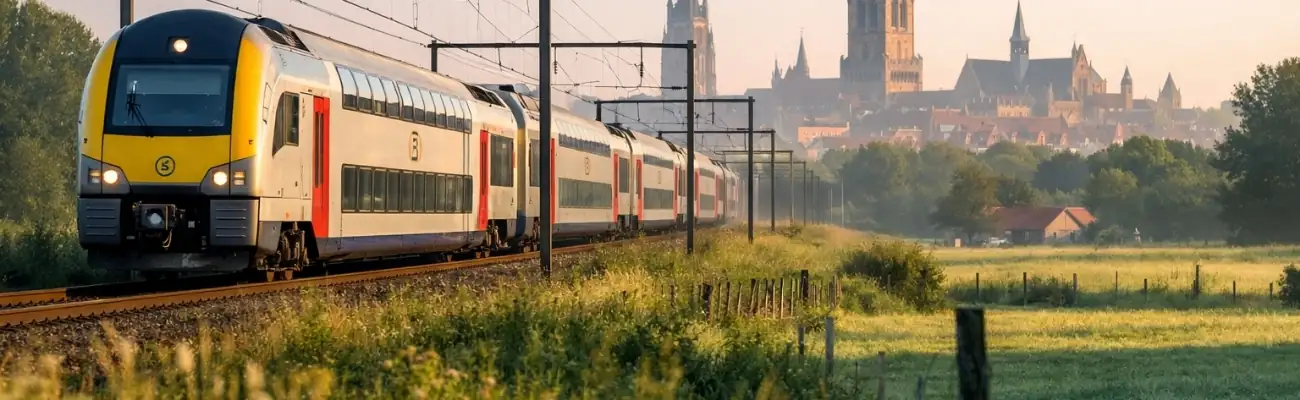
Planning a day trip from Belgium's capital to its most enchanting medieval city? The journey from Brussels to Bruges is one of the most popular rail routes in Belgium, and for good reason. This UNESCO World Heritage city, with its winding canals, cobblestone streets, and perfectly preserved medieval architecture, sits just an hour away from Brussels.
Whether you're considering the train, bus, or car, this comprehensive guide will help you choose the best transportation option and navigate your journey with confidence.
Why Visit Bruges from Brussels?
Before we dive into transportation details, it's worth noting why this day trip ranks among Europe's best. Bruges offers a stark contrast to cosmopolitan Brussels imagine stepping into a fairytale where horse-drawn carriages clatter along medieval squares, swans glide through tree-lined canals, and the aroma of fresh Belgian waffles fills the air. The compact city center means you can explore thoroughly in a single day, making it perfect for travelers based in Brussels.
| Option |
Best For |
Typical Duration |
Cost Range |
Main Advantages |
Things to Consider |
| Train |
Most travelers (best all-around choice) |
~1 hour |
Varies by ticket/time |
- Fastest and most convenient
- Frequent departures all day
- Comfortable and reliable
- Arrives near Bruges city center
|
|
| Bus |
Budget-focused travelers |
~1.5–2 hours |
Often €5–10 |
- Cheapest option
- Good for flexible budgets
|
- Slower than the train
- Can be affected by traffic and stops
|
| Car |
Flexibility + countryside exploring |
Varies |
Fuel + parking + rental (if any) |
- Maximum flexibility
- Easy to add countryside stops
|
- Parking costs in/near Bruges
- Historic center is largely pedestrianized
|
Taking the Train from Brussels to Bruges: Step-by-Step Guide
Step 1: Choose Your Departure Station
Brussels has multiple train stations, and knowing which one to use can save you time and confusion. The three main stations serving the Bruges route are:
Brussels-Central (Bruxelles-Central/Brussel-Centraal): Located in the heart of Brussels near the Grand Place, this is the most convenient starting point for tourists staying in the city center. Most Bruges trains stop here.
Brussels-Midi (Bruxelles-Midi/Brussel-Zuid): The city's largest station and international hub, ideal if you're arriving from Brussels Airport via train or staying in the southern part of the city. All Bruges trains pass through here.
Brussels-North (Bruxelles-Nord/Brussel-Noord): The northern station, useful if you're staying in that area, though Central or Midi are more commonly used by visitors.
The journey time is roughly the same regardless of which Brussels station you depart from, as trains typically stop at all three before heading to Bruges.
Step 2: Check Live Train Schedules
Real-time schedule information is crucial for planning your journey, as departure times and platforms can change. Belgium's national railway operator, NMBS/SNCB, operates this route with impressive frequency.
Official NMBS/SNCB Website: Visit the original website for the most accurate, up-to-date timetables. The website offers an English interface and real-time updates on delays or platform changes.
NMBS/SNCB Mobile App: Download the official app (available for iOS and Android) for convenient schedule checking, ticket purchasing, and live platform notifications.
Google Maps: While not official, Google Maps integrates NMBS/SNCB schedules and can be helpful for overall journey planning, showing you which Brussels station is closest to your location.
Trains typically run every 30 minutes during peak hours and hourly during off-peak times. The first trains depart around 5:30 AM, with the last trains leaving Brussels around 11 PM, though you should verify current schedules online.
Step 3: Purchase Your Train Ticket
You have several convenient purchasing options:
At the Station: Ticket machines are available at all Brussels stations with English language options. They accept credit/debit cards and cash. Ticket counters with staff are also available if you need assistance, though queues can be long during peak travel times.
Online: Purchase tickets through the NMBS/SNCB website or mobile app. You can show your digital ticket (via app or email) directly to conductors no need to print anything.
Ticket Prices: A standard second-class one-way ticket costs approximately €10-22, while first-class tickets run around €26. Return tickets cost roughly double the one-way price. Weekend rates and group discounts are sometimes available.
Pro tip: Don't forget to validate your ticket if you purchased a traditional paper ticket from a machine, though tickets bought online or via app don't require validation.
Step 4: Find Your Platform and Board the Train
Electronic departure boards throughout the station display real-time information in both Dutch and French (Belgium's main languages). Look for:
- Destination: "Brugge" (Dutch) or "Bruges" (French)
- Platform: Platforms (perrons/quais) are clearly numbered
- Departure Time: Listed in 24-hour format
- Train Type: IC (InterCity) trains are the standard service
Platforms are accessible via stairs, escalators, and elevators. Arrive at your platform at least 10 minutes before departure, especially if traveling with luggage or during busy periods.
Belgian trains are punctual, clean, and comfortable. Look for electronic displays inside the train showing upcoming stops. Trains have luggage racks, power outlets (on newer trains), and bathrooms on board.
Step 5: The Journey Experience
The Brussels to Bruges journey takes approximately 50-65 minutes, depending on which Brussels station you depart from and whether your train makes additional stops. Most trains make limited stops, typically at Ghent-Sint-Pieters station before continuing to Bruges.
The route offers pleasant views of the Flemish countryside, passing through agricultural fields, small villages, and historic towns. First-class carriages offer more spacious seating and quieter environments, while second-class is perfectly comfortable for the short journey.
Step 6: Arriving at Bruges Station
You'll arrive at Bruges station (the main and only passenger station in Bruges), located about 1.5 kilometers south of the historic city center.
Getting to the City Center: The medieval heart of Bruges is a pleasant 20-minute walk from the station along Oostmeers and Zuidzandstraat. Alternatively, several buses (lines 1, 4, 6, 11, 13, 14, and 16) depart directly outside the station and reach the Markt (main square) in about 8 minutes. A single bus ticket costs around €3.
Many visitors enjoy the walk as it gradually transitions from modern Bruges to the medieval core, building anticipation along the way.
Alternative Option: Taking the Bus
For budget-conscious travelers, bus services connect Brussels and Bruges with significantly lower fares. FlixBus and BlaBlaBus operate this route, with tickets sometimes available for as little as €5-10 when booked in advance.
Journey Time: 1.5 to 2.5 hours, depending on traffic conditions and the number of stops.
Departure Points: Buses typically depart from Brussels-North station or Brussels-Midi, with some services originating at Brussels Airport.
Booking: Reserve tickets through FlixBus. Early booking secures the best prices.
Considerations: While cheaper, buses offer less legroom, are subject to traffic delays, and run less frequently than trains. The arrival point in Bruges is typically also the train station or nearby, meaning you'll still need to reach the city center.
Driving from Brussels to Bruges
Renting a car provides ultimate flexibility, particularly if you want to explore smaller towns like Damme or the Belgian coast near Bruges.
Route: Take the E40 motorway westbound directly from Brussels to Bruges. The distance is approximately 100 kilometers (62 miles).
Journey Time: 1 to 1.5 hours in normal traffic conditions. Friday afternoons and Sunday evenings can see significant congestion.
Costs: Factor in rental car fees (from €30-50 per day), fuel (around €12-15 for the round trip), and parking. Belgium's motorways are toll-free.
Parking in Bruges: The historic center is largely car-free. Use designated parking facilities on the periphery:
- Station parking (near the train station)
- 't Zand parking (close to the center)
- Katelijnepoort parking
Expect parking fees of €2.50-4 per hour or €15-20 for full-day parking.
Best Practices and Travel Tips
Timing Your Visit: Arrive in Bruges before 10 AM to beat the day-tripper crowds, especially during summer months and weekends. Bruges transforms into a peaceful, magical place in early morning hours when mist rises from the canals.
Return Journey Planning: Book a return train time or at least note the schedule before leaving Brussels. The last trains to Brussels depart around 11:30 PM, but it's wise to leave Bruges by 8 or 9 PM to enjoy dinner back in Brussels.
Luggage: Belgian trains don't have strict luggage policies, but avoid traveling with large suitcases during peak commuter hours. Bruges station has luggage lockers if needed.
Weekend Travel: Weekend train tickets sometimes offer special discounts for return journeys. Check the NMBS/SNCB website for current promotions.
Language: Train announcements are made in Dutch, French, and sometimes English. Staff at major stations typically speak English, making navigation easy for international visitors.
Final Recommendations
For the vast majority of travelers, the train is unquestionably the best way to travel from Brussels to Bruges. It combines speed, comfort, reliability, and convenience at a reasonable price. The stress-free journey allows you to relax, enjoy the scenery, and arrive refreshed in Bruges' city center.
Book your tickets in advance through the NMBS/SNCB website or app, arrive at your Brussels station with time to spare, and prepare for one of Belgium's most rewarding day trips.
Once you arrive, having a clear plan can help you make the most of your time, especially if you are visiting for just one day. If you intend to explore several of the city’s key attractions, Bruges E-pass can be a practical way to keep your itinerary organized and efficient without overcomplicating your schedule.
Note: Prices and schedules mentioned in this guide are approximate and subject to change. Always verify current information through official sources before traveling.