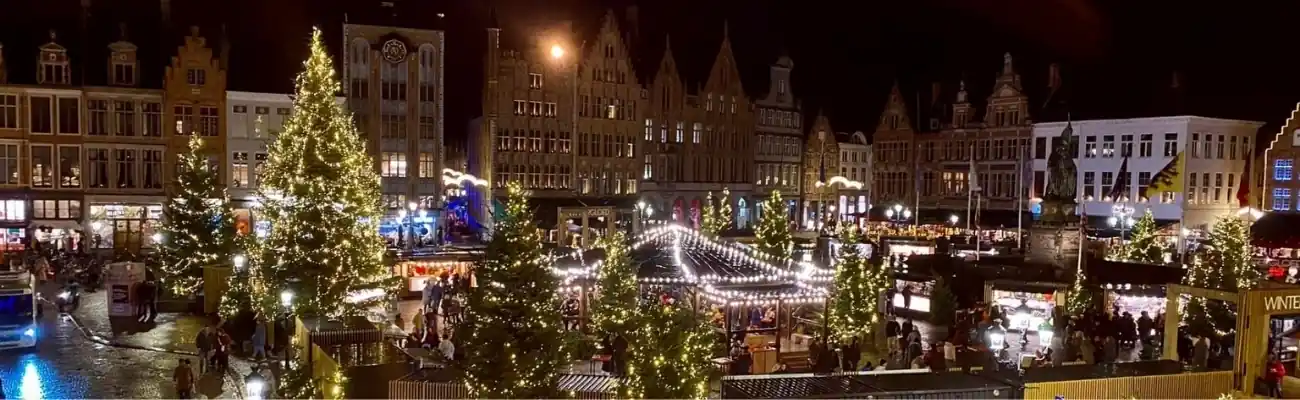
Bruges in winter feels like a city preserved inside a snow globe. As temperatures drop and daylight softens,
the medieval streets, canals, and squares take on a calm, atmospheric character that many travelers consider
the city’s most authentic season. Christmas decorations, seasonal markets, and candlelit streets add warmth
without overwhelming the historic setting.
This winter itinerary is designed to help travelers understand how Bruges changes between late November and
February, what to expect during the Christmas period, and how to plan each day efficiently while respecting
weather, daylight hours, and seasonal openings.
Why Winter Is a Special Time to Visit Bruges
Winter in Bruges is less about rushing between attractions and more about atmosphere, reflection, and slow
exploration. Visitor numbers are noticeably lower compared to spring and summer, allowing easier access to
historic streets, museums, and viewpoints.
What defines winter in Bruges:
- Crisper air and a quieter historic center compared to peak seasons
- Christmas lights that enhance medieval architecture rather than overpower it
- Seasonal food and drinks that suit cold-weather days
- A slower, more local rhythm that makes the city feel timeless
Snow is not guaranteed, but misty mornings, frosty rooftops, and early sunsets contribute to Bruges’ winter
character.
Christmas Season in Bruges: What to Expect
The Christmas season in Bruges generally runs from late November through early January. Decorations remain
elegant and restrained, matching the city’s historic tone rather than transforming it into a theme-park-style
destination.
Key Christmas highlights often include:
- Traditional Christmas market areas in central squares
- Festive lighting around Markt, Burg Square, and the main canal routes
- Seasonal concerts and church events during holiday weeks
- Temporary ice-skating installations during peak periods
Unlike larger European cities, Bruges keeps its Christmas atmosphere intimate, walkable, and heritage-focused.
Suggested Winter Itinerary for Bruges
This itinerary is structured for short daylight hours and colder weather, balancing outdoor walks with indoor
cultural stops.
Day 1: Historic Core and Winter Walks
Begin in the historic center, where winter mornings are calm and ideal for photography. The soft light and
quieter streets make it easier to appreciate Bruges’ medieval layout.
Suggested route:
Walking earlier in the day helps you enjoy Bruges before day-trippers arrive. In the afternoon, focus on
sheltered streets and indoor stops such as small galleries, historic courtyards, or cafés known for hot
chocolate and local pastries.
Day 2: Museums and Cultural Depth
Winter is one of the best seasons for museums in Bruges. With fewer visitors, galleries feel more
contemplative and unrushed.
Recommended winter-friendly focus:
- Flemish art and medieval collections
- Historic hospitals, churches, and monastery sites
- Smaller, specialized museums suited to shorter, focused visits
Museum interiors provide warmth while deepening your understanding of Bruges’ role as a medieval trade and
cultural center.
Day 3: Christmas Atmosphere and Evening Bruges
If you are visiting during the Christmas period, dedicate part of the day to seasonal areas, then plan an
evening walk when the city looks its most cinematic.
Christmas-focused highlights:
- Central Christmas market zones
- Decorated streets after sunset
- Evening walks along illuminated canals
Winter evenings arrive early, making Bruges especially photogenic after dark. Soft lighting reflects on stone
façades and water, emphasizing the city’s medieval atmosphere.
Dinner times tend to be earlier in winter, and reservations are recommended during the Christmas season.
Seasonal Food and Winter Comforts
Cold weather in Bruges naturally shifts attention to local food and drink. Winter menus emphasize warmth,
richness, and tradition.
Typical winter choices include:
- Belgian stews and slow-cooked dishes
- Seasonal waffles and pastries
- Hot chocolate made with Belgian chocolate
- Winter beers brewed specifically for the season
Cafés and restaurants become part of the travel experience, offering comfort from the cold while supporting a
slower pace.
Weather and Practical Planning Tips
Winter temperatures in Bruges are generally cold but manageable, with occasional rain and limited daylight.
Planning around weather and opening schedules helps keep the trip smooth and enjoyable.
Practical winter planning:
- Dress in layers and prioritize waterproof footwear
- Plan outdoor walks earlier in the day
- Balance walking time with indoor attractions
- Check holiday opening schedules, especially in late December
Public transport remains reliable throughout winter, and the compact city center means most routes are walkable
even in colder weather.
Who Should Visit Bruges in Winter
Winter and Christmas in Bruges are particularly suitable for travelers who value atmosphere over busy
schedules.
Ideal for:
- Couples seeking a romantic, quiet setting
- Cultural travelers focused on history and museums
- Photographers drawn to mist, light, and reflections
- Visitors who prefer fewer crowds and slower travel
Those expecting large-scale Christmas events or nightlife may find Bruges intentionally understated, which is
part of its appeal.
Winter Bruges as a Thoughtful Travel Experience
Bruges in winter reveals the city’s original character more clearly than any other season. Without summer
crowds, its medieval streets feel closer to their historical rhythm. Christmas enhances this atmosphere without
changing the city’s identity.
This itinerary reflects how Bruges is best experienced in winter: slowly, thoughtfully, and with attention to
detail an approach aligned with how Bruges E-pass structures cultural discovery across seasons.